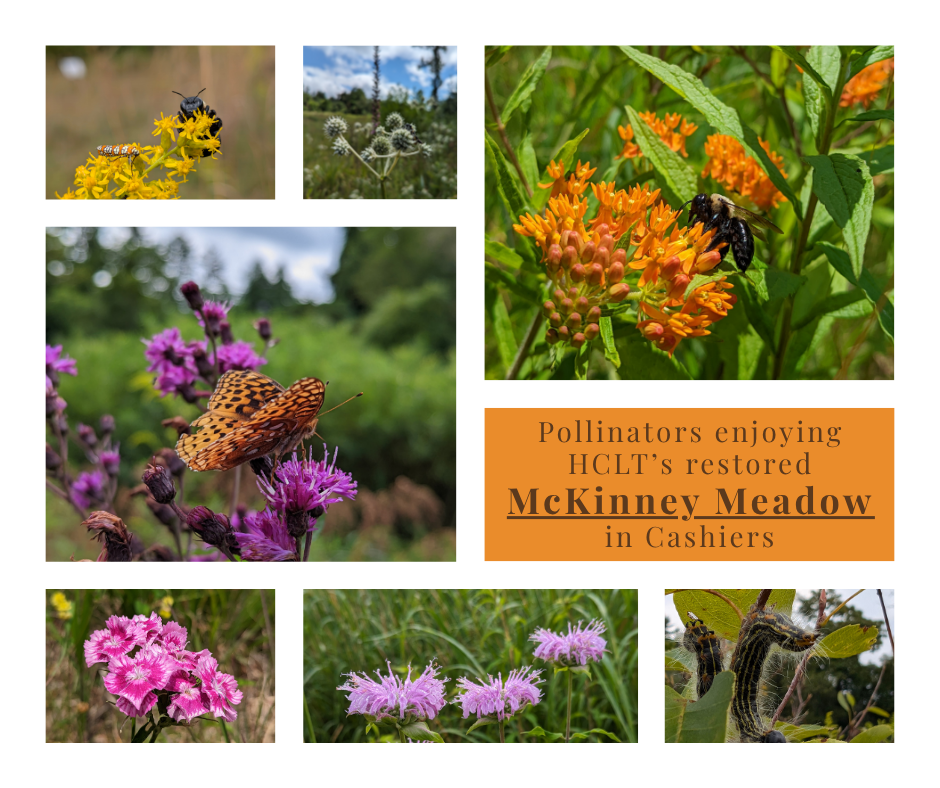
The Power of Your Backyard
The backyard is the single most powerful tool we have to positively impact the planet. Doug Tallamy, professor and author, encourages us to explore the relationship between native plants and wildlife in Nature’s Best Hope. Landscaping with our specific ecoregion in mind will create crucial habitats, food gardens and reproduction sites for pollinators and birds. Planting layers of native plants also protects watersheds, prevents erosion, builds healthy soils and sequesters carbon.

An entomologist at heart, Tallamy refers to insects as “the little things that run the world.” His writing challenges the negative connotations surrounding common insects and provides mind-bending statistics that will have you rethinking pesticide use this season. He urges the reader to “think of a plant as a bird feeder.” Planting specific native oaks can support hundreds of caterpillar species, greatly increasing bird and pollinator productivity. Use (https://homegrownnationalpark.org/get-started-planting-native/) Tallamy’s Homegrown National Park (https://homegrownnationalpark.org/get-started-planting-native/) website to explore lists of native plants specific to your zip code and ecoregion. Through small, mindful actions you can transform your lawn into a beautiful, lively, and high-functioning ecosystem where you can witness the sacred interplay between all species from your own little corner of the world.

Visit HCLT’s Mckinney Meadow where many of Tallamy’s strategies were employed.

Plant your yard according to your specific ecoregion at Homegrown National Park (https://homegrownnationalpark.org/) website


Relocating the Endemic Mountain Purple Pitcher Plant
Sarracenia purpurea var. montana

HCLT partnered with EnviroScience, a nationwide environmental consulting group, to relocate Mountain Purple Pitcher plants from the head of a lake that is permitted to be dredged near Cashiers. Sarracenia purpurea var. montana receives a S1/S2 state ranking, classified as a critically imperiled variety in North Carolina, South Carolina and Georgia.  This variety is under review to be included in the U.S. Endangered Species Act because less than two dozen populations occur and are found solely in mountain bogs across the three states.

This plant belongs to the Sarracenia genus of carnivorous plants and prefers wetland ecosystems with high presence of sphagnum mosses and sunlight. Threats to this plant include competition with other species for sunlight, anthropogenic diversion of water, habitat loss, and poaching. The S.purpurea traps insects in pools of water that collect in the plant’s namesake pitchers. The bright green, purple-veined structures stood out against the muted yellows and browns of the surrounding dormant wetland. With our team of six, we were able to carefully dig up and relocate over 500 clusters to nearby permanent conservation easements where they will live in protected habitat, forever. EnviroScience captured waypoints for each relocated plant site, so we can come back next season and track survivorship.

From sinking thigh-deep in mud to scrambling through prickly swamp rose, I left at the end of the day feeling tired and inspired - knowing our efforts provided a way forward for an imperiled species. Conservation isn’t always black and white and sometimes pressures from development can’t be avoided. We were alerted to the potential loss of an endemic by biologists from EnviroScience and were able to act before the lake was dredged. This case exemplifies the importance of the thorough ecological data and inventory collected from all of our conservation easements and the commitment we make to steward these properties in perpetuity. In this story, data is the unsung hero because we are not able to protect something if we don’t know it is there.

Relocating Highbush Blueberries to Preserve Mountain Juniper on Satulah Mountain


HCLT Stewardship Intern Jonathan Tippette relocates blueberries from Satulah summit.

With the help of volunteers, we ventured to the summit of Satulah to rehome highbush blueberries (Juniperus communis var. depressa). This species of Juniper is hard to find this far south because it is a glacial relic. Satulah provides the perfect environment for this native shrub. To prevent the blueberries from encroaching on the Juniper’s growing space, we occasionally remove and transplant blueberry bushes.

Kids in Nature
SHHHH We’re trying to see the birds!!!

Boys and Girls Club in Highlands and Cashiers got to hike outside and look for resident birds. Our Highlands crew identified Song Sparrows at Ravenel Park  while our Cashiers team spotted Northern Cardinals on the Ramble . Every season we can be part of nature whether it’s through listening to bird calls, looking for animal signs, or identifying plants.

The Gordon Center Kids in Nature team hiked Dixon Woods Park and learned about macroinvertebrates by the pond. After an introduction to macroinvertebrates, they chose their favorite one and created a picture book based on its shape and function in the water. Incorporating creativity with information lets adults and students grow as scientists and have fun too!


In every walk with nature, one receives far more than he seeks”

-  John Muir